This is 40
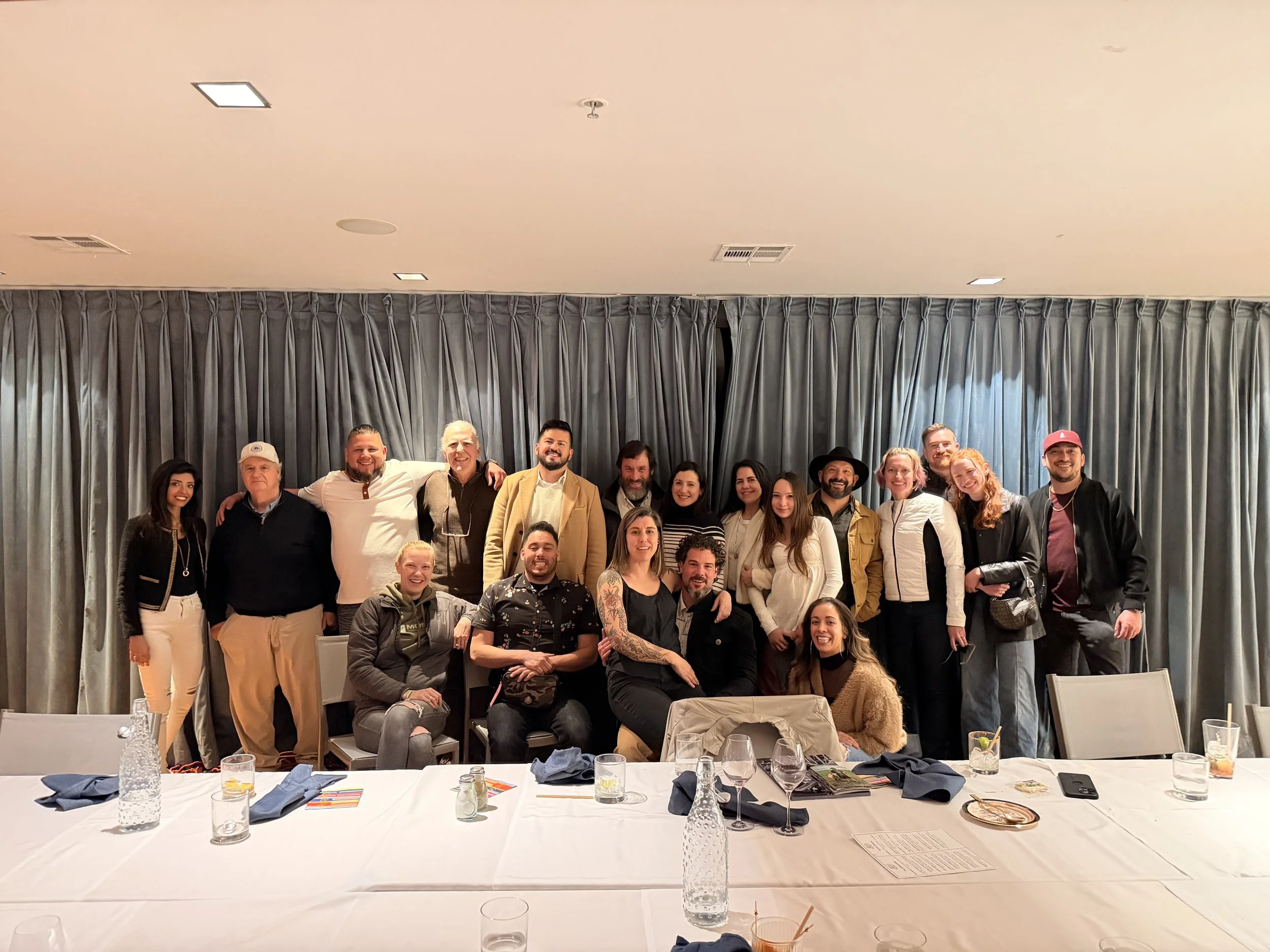
I stood at the end of a long table, my daughter by my side, slightly flush with the nervousness of speaking in front of so many people who mean so much to me.
One by one, everyone around the table had just finished telling the room how they knew me. Not accomplishments or titles, but moments. First meetings. Shared roads. Small fragments of life that somehow endured. It felt, in a way I didn’t expect, like living through my own eulogy while still very much alive. A rare chance to hear how you exist in the memories of others.
Gratitude and grief sat quietly next to each other. It was a strange tenderness, the kind that comes with witnessing time pass; gratitude for what is here, and grief for what has already slipped quietly behind us.
Before I spoke, I asked my daughter to really look around the room.
“This,” I told her, “is the most valuable thing you can have in life. Who you choose to take on the bus of life matters.”
Not where the bus is headed. Not how fast it’s going. Just who sits beside you when the road gets rough.
If I’m honest, turning forty arrived heavier than I thought it would.
The Monday after that gathering, my actual birthday, I went to the gym and tweaked something in my back. It felt insignificant at first. A reminder that the body keeps score, even when the mind wants to move on. That night, when I stood up to go to the bathroom, my back seized. Pain flattened time. I couldn’t walk. By morning, I was in the ER.
I spent the next week stretched out on the couch, watching daylight move across the walls. And somewhere between the heating pads and the long hours of stillness, a quiet reckoning set in. The kind that doesn’t shout. It just waits.
I started telling myself familiar stories. That I had lost momentum. That my career had somehow drifted backward. That I missed the ocean. That maybe the desert wasn’t where I was meant to be.
Pain has a way of shrinking the world. It turns the future into a question mark and the past into evidence.
To my girlfriend’s credit, and to my closest friends’, they didn’t let me disappear into it.
“Get out of the house,” they said. “Stop reaching out online. Do what you do best. Talk to people. In person.”
So I did.
And within a week, something subtle shifted. Not clarity. Not answers. Just movement. I found a rhythm again. I returned to the gym with less ego and more patience, focusing on my core first. Fifteen to thirty minutes a day. Quiet work. Foundational work.
Age has a way of stripping away illusions. You realize strength isn’t about force, but about structure. Not how much you can lift, but what you can carry over time.
I’ve learned that obsessing over the problem only feeds it. Wisdom, when I’m willing to listen, suggests something harder: obsess over the outcome you want to live into.
I don’t have my direction fully mapped. It feels like a reprogramming, not just of the mind, but of the heart. An unlearning of patterns I mistook for identity. My girlfriend has said, more than once, that my mental health has often been the invisible ceiling in my life. That maybe I’ve never fully allowed myself to soar.
That idea lingers.
Forty doesn’t feel like an ending. It feels like an audit. A pause where you’re asked to account for what you’ve been carrying, and whether it still belongs on the bus.
Moving forward, I will choose more carefully. I will continue to invite good people to take the ride with me. I will value presence over performance, depth over noise, conversations over algorithms.
Wealth, I’m learning, has very little to do with accumulation. It’s measured instead by who knows your story, who sits beside you when the road bends, and the experiences you’re willing to share before the ride is over.